


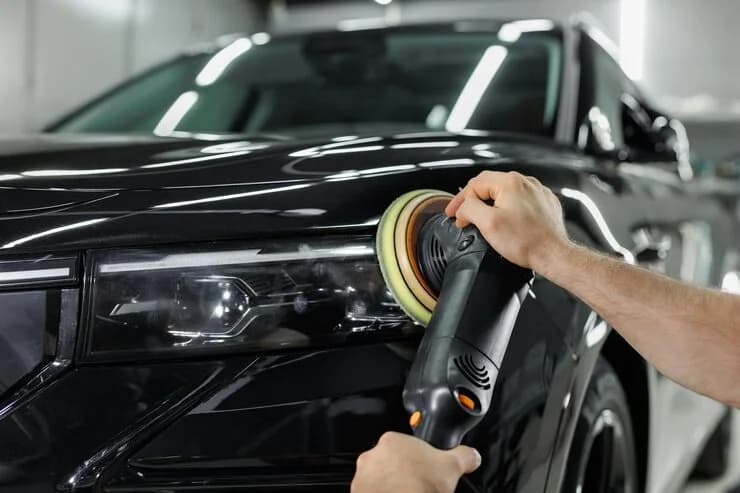
If you’ve ever stood in the vehicle treatment lane thinking which product to grab, you aren’t alone. Even though they serve entirely different purposes and interact with your vehicle’s paint in unique ways, many owners still use the terms interchangeably. In this blog, Motor and Mechanix settle the car polish vs wax debate. Read on to discover exactly what your automobile needs, when to apply each product and how the right approach can completely transform your car’s appearance.
What is Car Polish?
Instead of just hiding flaws, car polish utilizes mild abrasives to permanently fix your paint. It gently buffs away a microscopic layer of the clean coat, eliminating the damage developed from months on the road. Some of the most basic problems polish manages consist of:
- Swirl marks caused by improper washing or automatic car washes
- Oxidation and dullness caused by prolonged sun exposure
- Water marks and mineral stains left behind after cleaning
- Fine scratches from branches, keys or careless contact
Polishing brings back the shine by smoothing out the paint surface itself, rather than sitting on top of it the way wax does. It’s a corrective treatment, meaning it really enhances the physical condition of the paint. Most of the expert detailers recommend polishing prior to any application of protective layer, since it develops a clean, even base for whatever product comes next.
Types of Car Polish You Should Know
Not all polishing products are the same and selection of the incorrect one can do more harm than good. Polishes are usually grouped by how abrasive they are:
- Mild-cut polish – Most appropriate for automobiles with small swirl marks or light dullness
- Medium-cut polish – Handles moderate scratches and normal oxidation
- Heavy-cut polish – Booked for older automobiles with deep oxidation or significant surface damage
Utilization of an overly aggressive polish on healthy paint can slim the clean coat unnecessarily, which is why the majority of owners favor getting their car polish treatment done professionally rather than experimenting at home.
What is Car Wax?
Car wax is a protective layer applied after polishing rather than a corrective one. It doesn’t correct paint imperfections; instead, it forms a protection between your car’s surface and everything the outside world throws at it. This is where usage of car wax polish blend really matters — polish fixes the surface flaws and wax locks in the shine. Once you apply the wax, it creates a glossy, hydrophobic barrier that keeps water beading off smoothly rather than pooling on your finish.
Types of Car Wax You Should Know
Similar to polish, wax also comes in various formulations, each appropriate for different requirements:
- Carnauba wax – A natural wax cost for its deep, warm shine and high-end finish
- Synthetic wax – Stays longer and provides powerful against heat and chemicals
- Hybrid wax – Incorporation of natural and synthetic ingredients for a balance of shine and durability
Decision from these depends on how frequently you’re willing to reapply and whether you give priority to appearance or long-term safety.
Distinction Between Car Polishing and Waxing
Prior to selection of the right product for your vehicle, understanding the difference between car polishing and waxing is crucial. While both aim to improve your car’s appearance, they work in completely different ways. Here is a simple side-by-side comparison:
| Feature | Car Polish | Car Wax |
| Purpose | Fixes paint imperfections | Safeguards and increases shine |
| Action | Mildly abrasive, eliminates a slim clean coat layer | Non-abrasive, sits on top of paint |
| Best Utilized For | Scratches, oxidation, dullness and faded paint | Long-lasting shine and surface safety |
| Application Frequency | Occasional (a few times a year) | Every 2 – 3 months |
| Durability | Permanent fix of the treated area | Temporary protection that fades as time goes by |
| Sequence of Application | Applied first | Applied after polishing |
| Tools Needed | Polishing pad, sometimes a machine buffer | Applicator pad and microfiber cloth |
As the table displays, car polish and wax aren’t rivals — they’re teammates in a complete car treatment routine. Leaving one for the other mostly leads to incomplete results – polishing without waxing leaves fixed paint unprotected whereas waxing without polishing simply locks existing flaws under a shiny coat.
Car Waxing Advantages
Once your paint is polished and fixed, waxing seals in that hard work and adds a new layer of protection. Below are some of the large car waxing benefits every automobile owner should know:
- Water Resistance – A waxed surface repels water effectively, decreasing water marks and rust around seams
- Improved Gloss – Wax gives your vehicle a deep, reflective shine that makes factory colors appear richer
- Protection from Contaminants – It acts as a sacrificial protection against dust, bird droppings and street grime
- Easier Cleaning – A waxed car is simpler to wash since dirt doesn’t bond as tightly to the sealed surface
- Enhanced Resale Worth – Continuously waxed automobiles tend to retain their paint condition better as time goes by
Common Mistakes to Prevent When Polishing or Waxing
Even with good products, the method is just as crucial as the formula you select. Prevent these common mistakes:
- Leaving the wash phase prior to polishing, traps dirt against the paint
- Application of polish or wax under direct sunlight, which causes irregular drying and streaking
- Applying wax too broadly, making it difficult to buff off evenly
- Usage of a dirty or gritty applicator pad, which can introduce new scratches
Should You Use Both Car Wax and Polish?
The small answer is yes. Using car wax and polish together gives you the best of both worlds — repaired paint below and long-lasting protection on top. Neither product fully substitutes for the other and depending on just one normally means your car’s finish only gets half the treatment it requires.
Complete Application Schedule
Follow this easy routine for the best outcomes:
- Wash your car properly with a pH-balanced shampoo before any product touches the paint
- Clean off remnants with a clean microfiber cloth and assess the surface under good lighting
- Application of car polish through a soft applicator or machine buffer to fix scratches and dullness
- Apply a thin, even coat of car wax to trap in the shine and add protection
- Let the wax haze over as instructed, then buff gently for a shiny, dealership-like finish
At Motor and Mechanix, we suggest this blend for anyone serious about upkeeping their car’s look and long-term resale value instead of treating polish and wax as either-or options.
Conclusion
At the end of the day, polish and wax aren’t competitors — they’re teammates in achieving a flawless, durable finish. Polish fixes, wax safeguards and together they keep your car appearing its best for far longer than either product could handle alone. In case you aren’t sure about where to begin, the professionals at Motor and Mechanix can walk you through the correct products and methods for your automobile.
FAQs
Can I use car wax without polishing first?
Yes, but the outcomes won’t be as impressive. Wax will still add shine and protection, but it won’t repair existing scratches or dullness — it easily seals them in as they are.
How frequently should I polish my vehicle?
Polishing isn’t needed as often as waxing since it’s a corrective stage rather than routine maintenance. Most of the automobiles only need polishing 1 – 2 times yearly or whenever physical flaws appear.
Does car polish eliminate scratches permanently?
Car polish can eliminate minor surface scratches and swirl marks permanently since it smooths and levels the clean coat itself. Deeper scratches might need expert paint correction.
Which lasts longer, wax or a ceramic coating?
Wax typically lasts 2 – 3 months under normal conditions whereas ceramic coatings can last a year or more. Wax continues to be more cost-effective and simpler to apply at house.
Is it secure to polish and wax a car at home?
Yes, both procedures can be done securely at home with the correct products and a minor patience. For best outcomes, following proper methods or consulting experts such as Motor and Mechanix is suggested.