


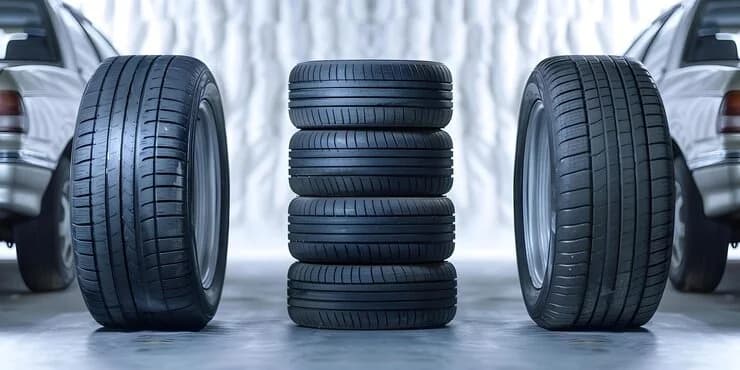
Noida’s roads blend smooth expressways, busy urban routes, development zones and occasional rough patches, making tyre selection significant for everyday driving. While both tubeless and tube tyres have their advantages, their performance, maintenance needs and puncture behaviour vary significantly. Knowledge about these distinctions can help you select the correct option according to your automobile, driving patterns and budget.
Tubeless vs Tube Tyres – Understanding the Basic Difference
The key distinction between tubeless and tube tyres is how they hold air. A tube tyre utilizes a separate inner tube to contain the compressed air whereas a tubeless tyre stores air directly between the tyre and the wheel rim. Modern passenger cars are predominantly designed around tubeless technology because it offers practical advantages for daily urban driving.
For Noida motorists, the choice should not be based only on the initial purchase price. Factors such as puncture frequency, highway usage, maintenance, safety and wheel condition also influence the overall value of a tyre.
| Feature | Tubeless Tyres | Tube Tyres |
| Air retention | Directly inside tyre | Inside inner tube |
| Puncture response | Usually gradual air loss | Can lose air more quickly |
| Puncture repair | Generally easier | Requires tube inspection |
| Heat management | Better suited to contemporary vehicles | More heat can build between tube and tyre |
| Maintenance | Relatively convenient | More maintenance involved |
| Modern car compatibility | Widely used | Less common in passenger cars |
Why Tubeless Tyres Suit Noida’s Roads
Tubeless tyres are normally the more functional option for automobiles continuously driven around Noida. Traffic, road debris, potholes and frequent changes between urban roads and expressways can expose tyres to various kinds of stress.
One important benefit is the way tubeless tyres react to punctures. If a nail or similar object penetrates the tread, air mostly leaves slowly rather than causing immediate deflation. This gives the driver a better opportunity of noticing the issue and reaching a secure location for evaluation.
Other advantages include:
- Improved puncture convenience – Small tread punctures can mostly be repaired without removing the tyre completely.
- Appropriate for highway driving – They are well suited to cars that continuously utilize routes like the Noida-Greater Noida Expressway.
- Enhanced daily functionality – Drivers can supervise tyre pressure and handle small punctures more comfortably.
- Lower routine maintenance – There is no separate tube to inspect, replace or repair.
Nonetheless, tubeless tyres rely on a properly sealed tyre-and-rim combination. A broken or seriously rusted rim can cause air leakage even when the tyre itself is healthy.
When Tube Tyres Can Still Make Sense
Tube tyres have not disappeared completely. They continue to be used for certain older vehicles, specific wheel-and-tyre combinations and applications where compatibility or cost is the primary consideration.
A tube tyre can make sense when:
- The vehicle manufacturer specifically recommends a tube-type setup
- The existing wheel design is not compatible with tubeless tyres
- Replacement tubes are easily available and affordable
- The vehicle is used in conditions where a tube-type configuration is appropriate
However, switching from tube to tubeless should never be done simply by removing the tube. The wheel must be compatible with a tubeless tyre and capable of maintaining an airtight bead seal.
Punctures, Repairs and Safety – Which Performs Better?
For everyday Noida driving, tubeless tyres generally offer a more convenient puncture experience. A small tread puncture can often be repaired using an appropriate professional repair method. The tyre should still be inspected for internal damage, especially if the vehicle has been driven for a significant distance with low pressure.
Tube tyres require the inner tube to be removed and checked when certain punctures or tube-related failures occur. A broken tube might need repair or replacement, adding another element to the maintenance procedure.
Motorists should prevent treating recurred punctures as a minor issue regardless of tyre type. Frequent punctures might indicate worn tread, broken wheels, incorrect tyre pressure or road-impact damage.
Choosing Cost-Effective Tyres Without Compromising Safety
Price matters, but the cheapest option is not necessarily the most economical over the tyre’s usable life. Drivers seeking affordable tyres in Noida should compare specifications rather than considering only the sticker price.
Prior to buying, assess:
- Tread pattern – Consider whether your driving is primarily urban, highway or mixed.
- Speed rating – Ensure it suits the vehicle and expected driving conditions.
- Correct tyre dimension – Match the manufacturer-recommended size and load rating.
- Manufacturing date – Avoid unnecessarily old stock.
- Warranty – Understand what the manufacturer’s warranty covers.
- Installation quality – Proper fitting, balancing and inflation are essential.
A slightly more costly tyre can provide better longevity, braking performance and long-term worth than an extremely cheap alternative.
How to Select the Correct Tyre Dealer in Noida
Buying from a trusted seller is as important as selecting the correct tyre. A professional best tyre dealer in Noida should help you match the tyre to your vehicle instead of pushing a particular model solely because it is available.
When comparing a Tyre shop in Noida, look for services such as:
- Tyre size and specification verification
- Professional tyre fitting
- Wheel balancing
- Wheel alignment
- Tyre pressure checks
- Puncture inspection and repair
- Guidance on tyre rotation and replacement
For motorists specifically looking for a Tubeless tyres shop in Noida, it is also useful to confirm whether the dealer stocks tyres compatible with your car and provides proper installation.
Tubeless or Tube Tyres – What Should Noida Drivers Choose?
For most modern passenger cars used in Noida, tubeless tyres are the more sensible choice. Their gradual puncture response, easier repairs, lower maintenance requirements and compatibility with contemporary vehicles make them well suited to urban and highway driving.
Tube tyres remain relevant where a vehicle or wheel specifically requires them. Therefore, the correct decision should always begin with the manufacturer’s specifications rather than simply choosing whichever option costs less.
Conclusion
For most Noida car owners, tubeless tyres provide the better combination of convenience, safety and everyday practicality, particularly for mixed city and highway driving. Tube tyres still have their place in compatible vehicles, but modern passenger cars generally benefit more from a properly fitted tubeless setup. Motor and Mechanix can help motorists evaluate tyre condition, fitting, balancing and related requirements before making a replacement decision.
FAQs
Are tubeless tyres better for Noida streets?
For the majority of contemporary passenger cars, yes. Tubeless tyres generally offer simpler puncture management, decreased maintenance and good suitability for both city traffic and highway driving.
Can a tube be fitted inside a tubeless tyre?
It may be technically possible in certain circumstances, but it shouldn’t be done as a routine practice. Tyre and wheel compatibility should be evaluated by a qualified expert before utilizing any alternative configuration.
Do tubeless tyres avoid punctures?
No. Nails, sharp objects and road debris can still puncture tubeless tyres. Their benefit is that the majority of small punctures cause air loss gradually and can be repaired relatively conveniently.
How frequently should I assess my tyre pressure?
Check tyre pressure continuously, ideally when the tyres are cold. Follow the pressure suggested by your automobile developer rather than depending on a generic pressure figure.
Should I select tyres according to price only?
No. Consider tyre size, load and speed ratings, development date, warranty, expected mileage, driving conditions and installation quality along with the purchase price.