


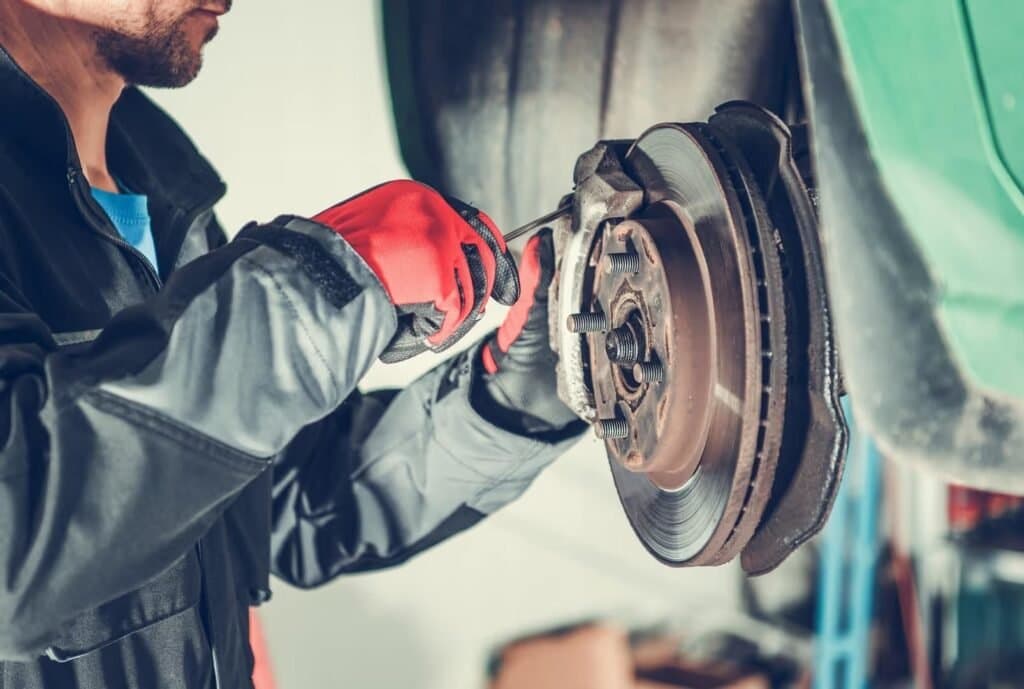
When applying the brakes a grinding noise isn’t something to ignore. It mostly indicates extra brake wear, damaged elements or problems that could compromise your security on the road. Locating the reason early can avoid costly repairs and decrease the risk of brake failure. At Motor and Mechanix, on-time checks help drivers resolve braking problems prior to them becoming large mechanical issues.
Learning About Why Car Makes Grinding Noise When Braking
When metal components in the braking system are grinding against each other due to wear or damage your car makes grinding noise when braking. Since brake pads, rotors and calipers operate together to stop your vehicle securely, an issue with any of these parts can lead to grinding sounds.
Common characteristics of grinding sounds include:
- Loud metallic scraping or rubbing
- Noise that becomes louder while slowing down
- Grinding only during hard braking or at low speeds
- Vibration in the brake pedal
- Reduced braking performance
Ignoring these symptoms can cause further damage to multiple brake components.
Common Causes for Car Grinding Noise
Various issues can cause a car grinding noise. Knowing the source helps determine the correct repair prior to the issue worsens.
1. Worn-Out Brake Pads
Brake pads are developed with friction material that gradually wears down as time goes by.
Signs include:
- Grinding after the brake pad material has completely worn away
- Metal backing plate rubbing against the brake rotor
- Longer stopping distances
- Squealing before grinding begins
On-time change of brake pads prevents rotor damage.
2. Broken Brake Rotors
Brake rotors experience continuous heat and pressure. As time passes, they can develop:
- Deep grooves
- Cracks
- Warping
- Irregular surfaces
When worn brake pads contact damaged rotors, grinding noises become much more noticeable.
3. Stones or Road Debris
Small stones or gravel sometimes become trapped between:
- Brake rotor and dust shield
- Brake pad and rotor
This often causes:
- Grinding only while driving
- Temporary scraping noises
- Sounds that disappear after debris is removed
Although less serious, the system should still be inspected.
4. Rust on Brake Elements
Cars parked for longer periods mostly develop surface rust on brake rotors.
Light rust usually:
- Disappears after several braking applications
- Produces mild grinding during the first drive
Heavy corrosion, nevertheless, might need rotor resurfacing or replacement.
5. Brake Caliper Issues
Brake calipers apply pressure to the brake pads.
A sticking caliper may:
- Keep the pad pressed against the rotor
- Create continuous grinding
- Cause uneven brake pad wear
- Generate extra heat
The complete braking system might get damaged when a faulty caliper is ignored.
Why is My Car Making Grinding Noise Even Without Braking?
Sometimes drivers notice the noise even when the brake pedal is not pressed.
Possible causes include:
- Brake dust shield touching the rotor
- Loose wheel bearings
- Damaged CV joints
- Faulty hub assembly
- Brake caliper remaining partially engaged
Whether the problem actually comes from the brakes or another drivetrain part can be determined by expert checks.
Warning Indicators that Need Immediate Attention
Grinding noises should never be treated as a normal part of driving.
Be aware of the following warning signs:
- Brake warning light on the dashboard
- Increased stopping distance
- Pulling of the car to one side during braking
- Brake pedal is soft or spongy to push
- Burning smell near the wheels
- Steering wheel vibration during braking
- Brake fluid leaks
In case several of these signs emerge together, prevent driving until the vehicle is checked.
What Happens If You Overlook Grinding Brakes?
The majority of drivers continue driving despite hearing grinding noises. Unfortunately, late in repairs mostly increase repair expenses.
Possible drawbacks include:
- Complete brake pad failure
- Damaged brake rotors
- Caliper replacement
- Wheel bearing damage
- Reduced vehicle control
- Higher repair bills
- Increased accident risk
A small brake pad replacement can become a complete brake system overhaul if overlooked.
How Mechanics Diagnose Brake Grinding
Expert technicians follow a systematic check procedure to locate the exact problem.
Crucial inspection includes:
- Visual check of brake pads
- Checking rotor surface condition
- Measuring brake rotor thickness
- Checking brake calipers
- Examining brake fluid
- Testing wheel bearings
- Road testing the vehicle
- Locating abnormal wear patterns
Precise diagnosis guarantees only the required parts are repaired or replaced.
Brake Maintenance Ideas to Avoid Grinding
Routine maintenance significantly reduces brake-related problems.
Follow these practices:
- Replace brake pads before they completely wear out
- Inspect brakes during every scheduled service
- Avoid aggressive braking whenever possible
- Flush brake fluid according to manufacturer recommendations
- Keep brake components clean
- Address unusual noises immediately
- Check rotors whenever brake pads are changed
- Rotate tyres regularly to promote regular wear
Preventive maintenance is always more cost-efficient than emergency repairs.
When Should you Visit for Brake Repair in Noida?
Brake noises should always be checked as soon as possible.
Look for expert Brake Repair service if:
- Grinding continues after several drives
- The noise becomes louder every day
- Braking performance decreases
- Brake warning lights appear
- Brake pedal vibrations increase
- The vehicle pulls during braking
- Metal-on-metal sounds become consistent
Seasoned mechanics can locate worn elements before they cause larger mechanical failures.
Why Select Motor and Mechanix?
Selection of the correct workshop guarantees your braking system is repaired correctly.
At Motor and Mechanix, customers benefit from:
- Seasoned automotive mechanics
- Detailed brake checks
- Genuine quality replacement parts
- Advanced diagnostic equipment
- Transparent repair recommendations
- Preventive maintenance advice
- Fast turnaround times
- Customer-oriented service
Continuous brake checks help enhance vehicle security alongside decreasing long-term repair costs.
Conclusion
One of the clearest indicators that your car needs immediate attention are grinding brakes. Early test avoids expensive repairs and keeps your vehicle secure on the road be it worn brake pads, damaged rotors, corrosion or caliper problems. Motor and Mechanix suggests scheduling an expert brake check at the first sign of unusual braking sound to maintain dependable stopping performance and drive with confidence.